
Property Taxes on Rural Land in Idaho
Idaho taxes rural acreage in two parts: working agricultural land is assessed on its income-producing value, while your home and homesite are assessed at market value. The result is that a farmhouse on farm ground can carry a very different tax bill than a standard suburban home, and the difference comes down to qualification rules that change how land is valued.
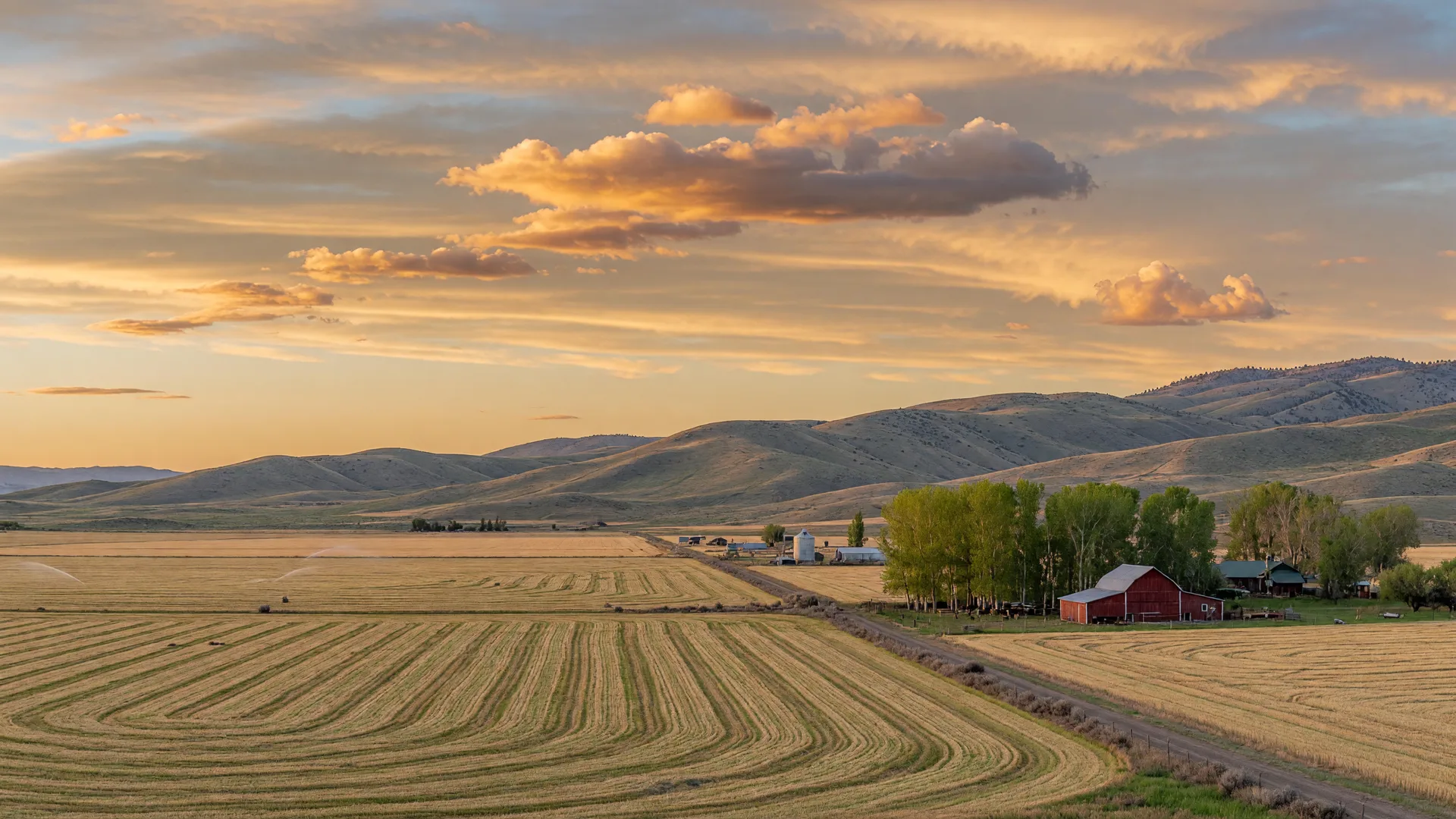
The two-part assessment
Land actively devoted to agriculture qualifies for agricultural valuation under Idaho Code, meaning it is assessed on what it can earn as farmland rather than what it might sell for. The house, the homesite around it, and all improvements, from the shop to the barn, are assessed at full market value.
Qualification rules
- Parcels over five contiguous acres qualify when used for crops, grazing, or forage, generally with a one-time application that a new owner must renew
- Parcels of five acres or less must have been actively farmed for three growing seasons and require an annual application due by April 15, with proof of minimum agricultural income
- Land that does not qualify is simply assessed at market value
Exemptions that apply to everyone
An owner-occupied residence gets the Idaho Homeowner's Exemption, the lesser of 50 percent of assessed value or the statutory cap, which stood at $125,000 in 2025. Lower-income owners may also qualify for the state's Property Tax Reduction program. Both are worth asking about at closing.
The Treasure Valley Acreage Homes Team
Two acreage agents at MORE Realty, serving Boise, Pocatello, Twin Falls, and Coeur d'Alene, Idaho. Questions about acreage? Call us, we answer our own phone.