
Acreage Home Inspections: What's Different on Land
A standard home inspection is only half the story on acreage: the well, the septic system, the irrigation, and the outbuildings carry the real risk, and each needs its own specialist. This guide walks through the acreage-specific inspection checklist we use on every rural property we represent, so you know what to test, who to hire, and what the results should look like before you write an offer.
The house inspection is still worth it
Start with the same inspection you would run on any home: structure, roof, electrical, plumbing, and HVAC. On acreage it is still important, but it is no longer the biggest risk on the property. The systems that can cost you five figures are outside the house, and they are the ones subdivision buyers never think about.
The well: flow, water quality, and the pump
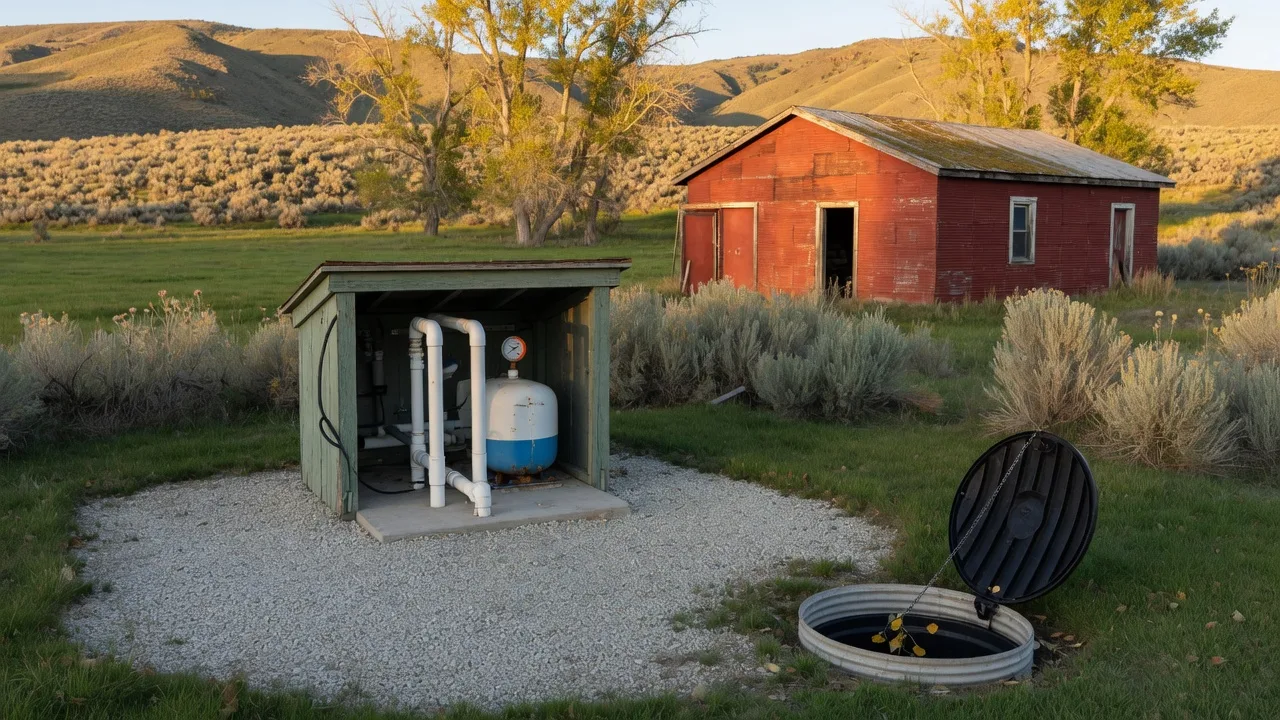
Most acreage outside city limits runs on a private well, and the well is the property's most important appliance. Ask the seller for the well log, then have a licensed well contractor run a flow test in summer conditions, not in spring when the water table is high. Have the water tested for coliform bacteria, nitrates, and any minerals flagged for your aquifer, and ask how old the pump and pressure tank are.
- Flow test: the well must keep up with the house plus summer watering, livestock, and anything else the property does
- Water quality: coliform, nitrates, and local minerals; Idaho DEQ and the county health district can point to what matters for your area
- Pump and pressure tank age and condition: a failing pump is a several-thousand-dollar replacement
- Well cap, casing, and pitless adapter: cracks here let surface water in
The septic: locate it, dye test it, and read the records
The septic system handles every gallon the household sends down a drain, and a failed drain field is one of the most expensive acreage repairs there is. Have the tank located and opened, run a dye test through the system, and check the pumping history. Idaho DEQ sets the statewide standards; Central District Health permits and inspects systems in Ada County, and Southwest District Health does the same in Canyon and Owyhee counties, and both keep records you can pull.
- Tank condition and pumping history: planners recommend pumping every 3 to 5 years
- Dye test: confirms the system drains and nothing surfaces
- Drain field location and condition: never assume, and never let a future shop go over it
- Permits and records: the health district file shows what was installed and when
Irrigation and water rights
If the property has irrigation water, the inspection extends to the water itself. Confirm the right actually attaches to the parcel, ask about the season and the annual assessments, and walk the property in late summer to see how the water behaves when it matters. Irrigation is often worth as much as the house on farmette ground, and it deserves the same due diligence.
Outbuildings and the shop
On acreage, the shop is often the deciding feature, so inspect it like a second house: roof, foundation, and electrical. Confirm the power was permitted and the panel handles your tools, check building placement against the septic drain field and county setbacks, and look for rodents. A building set over a drain field is a common acreage defect that a good inspector will catch.
Soil and drainage
Walk the whole property, not just the yard around the house. Look for standing water after a rain, a saturated drain field, low spots in the driveway, and where spring runoff goes. On an acre or more, drainage problems are rarely a quick fix, and they are easiest to see before you own the place.
Who pays and when
In practice, the buyer typically arranges and pays for the inspections before closing, though sellers sometimes share well and septic records up front, and a seller with a clean file is a good sign. The order matters too: run the well and septic checks before you spend money on the general inspection, because a failed well or drain field can end the deal before the house report ever matters.
Turn the report into the offer
A thorough inspection report is not the end of the conversation, it is the start of the negotiation. Repairs, credits, and price adjustments all flow from what the specialists find, and knowing the difference between a worn-out pump and a failed drain field tells you what to ask for. We read every report with our buyers and help translate it into an offer that protects you.
Keep reading
The Treasure Valley Acreage Homes Team
Two acreage agents at MORE Realty, serving Boise, Pocatello, Twin Falls, and Coeur d'Alene, Idaho. Questions about acreage? Call us, we answer our own phone.