
Greenhouses and Hoophouses on Idaho Acreage
A greenhouse or hoop house is how acreage owners turn the Treasure Valley's roughly 150 to 160 frost-free days into a harvest that runs most of the year. With the last spring frost usually landing in early May and the first fall frost arriving in early October, a well-sited structure can add weeks on each end, and a heated one can grow straight through winter. Here is what to think through before you pour a foundation or stretch your first row of plastic.
Why a greenhouse earns its place on acreage
The Treasure Valley runs a real growing season, roughly 150 to 160 frost-free days between the last spring frost, typically in early May, and the first fall frost, typically in early October. That is plenty for a summer garden, but it leaves a lot of the year on the table. A hoop house pushes the season by weeks at both ends, and the valley sits in USDA hardiness zone 7a on the current map, with some 6b to 7b microclimates along the river bottoms, which tells you which cold-hardy crops can ride out an unheated winter.
Hoop house or greenhouse?
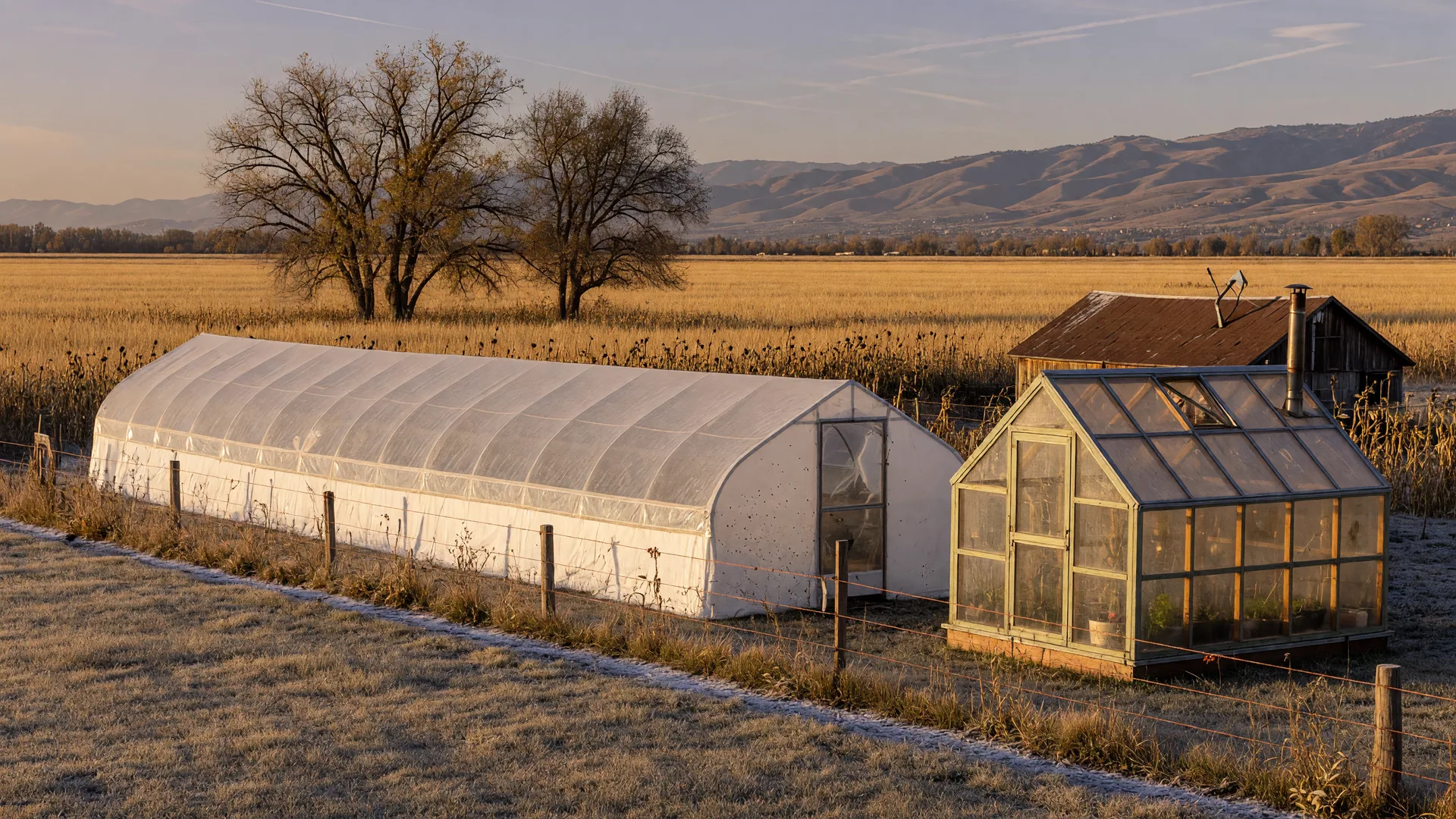
A hoop house, or high tunnel, is a row of metal hoops covered in plastic, usually unheated, and it is the workhorse of acreage growing: cheaper per square foot than a glass or polycarbonate house, easy to move or expand, and effective enough to add weeks to each end of the season. A greenhouse adds a frame, glazing, and often heat, which buys a longer season, more control, and a bigger price tag. Many Treasure Valley properties start with a hoop house for the vegetable beds and graduate to a small heated greenhouse for starts, citrus, or year-round greens.
- Sun: a south-facing site with clear winter light matters more than anything else
- Wind: Idaho's valley winds find any gap in plastic, so an exposed ridge costs you in repairs
- Power: a heated house needs a reliable circuit, so check how far the panel is and what running heat costs
- Water: run frost-proof lines or drain them before freeze-up, and know your well's winter capacity
- Foundation: a simple gravel pad can be enough for a hoop house, while a permanent greenhouse wants a real slab
What the county wants to know
Before you build, check your county's rules: zoning, setbacks, and whether the structure counts as an accessory building. Canyon County, where Paul is based, and Ada County both treat agricultural and residential acreage differently, and a hobby greenhouse usually lands in the accessory category, but a tall permanent structure or anything commercial can trigger a permit. The short version is the one we give every buyer: confirm the rules before you pour, not after.
If you are still shopping for the land, these questions belong on the tour. Ask whether the property has a south-facing, wind-sheltered spot near power and water, because that is a genuine asset worth paying for, the way a good well or a dry shop is.
Keep reading
The Treasure Valley Acreage Homes Team
Two acreage agents at MORE Realty, serving Boise, Pocatello, Twin Falls, and Coeur d'Alene, Idaho. Questions about acreage? Call us, we answer our own phone.