
Preparing Your Idaho Acreage for Winter
Late September is when Treasure Valley acreage starts its slow turn toward winter, and the work that protects a rural property happens before the first hard freeze, not after. This guide walks through the seasonal checklist that matters on an acre or more: the irrigation blowout, the well and septic, the shops and barns, and the pipes that feed the animals, so a cold snap never turns into a spring repair bill.
Start with the irrigation system
In the Treasure Valley the irrigation clock runs ahead of the weather. Most installers schedule blowouts between late September and mid-October, before the first hard freeze, and slots fill fast once the nights turn cold. If water stays in sprinkler pipes, backflow devices, or drip lines when the ground freezes, a single crack can take out a whole zone, and that is a spring project you did not want.
Call your irrigation company now and get on the schedule, especially if you bought in the last year or two and are not sure how the system was winterized before. Ask how they handle the backflow preventer: it needs to be drained and protected, not just blown out with the rest of the system.
Well, septic, and the pipes into the house
A well that runs year-round mostly takes care of itself, but it deserves a look before freeze-up. Insulate exposed or shallow well piping and check the well cap and pitless adapter for cracks. If you have a seasonal home or a second dwelling on the property, draining the pump, pressure tank, and lines is the job to get right, since water left in a tank cracks it when it freezes.
Septic systems are quieter about winter, but they still need a plan. If the tank has not been pumped in three to five years, schedule it before the ground freezes hard. Insulate tank lids and riser covers so they do not freeze shut, fix small leaks before ice makes them big ones, and keep heavy vehicles off the tank and drain field all winter, since frozen, compacted ground is the worst time to discover a problem.
- Test the well water and confirm the flow before winter, so you enter the season knowing the system's condition
- Insulate exposed pipes, the well cap, and the pitless adapter
- Pump the septic if it is due; insulate the lids and risers
- Keep vehicles and heavy equipment off the drain field
Shops, barns, and pump houses
Outbuildings are where acreage differs from a subdivision home. Drain water lines in shops and unheated barns, add heat tape to exposed plumbing, and make sure frost-free hydrants are actually set up so they drain. For animals, winterize the watering system: heated buckets or troughs, insulated tanks, and a plan for the day the power blinks.
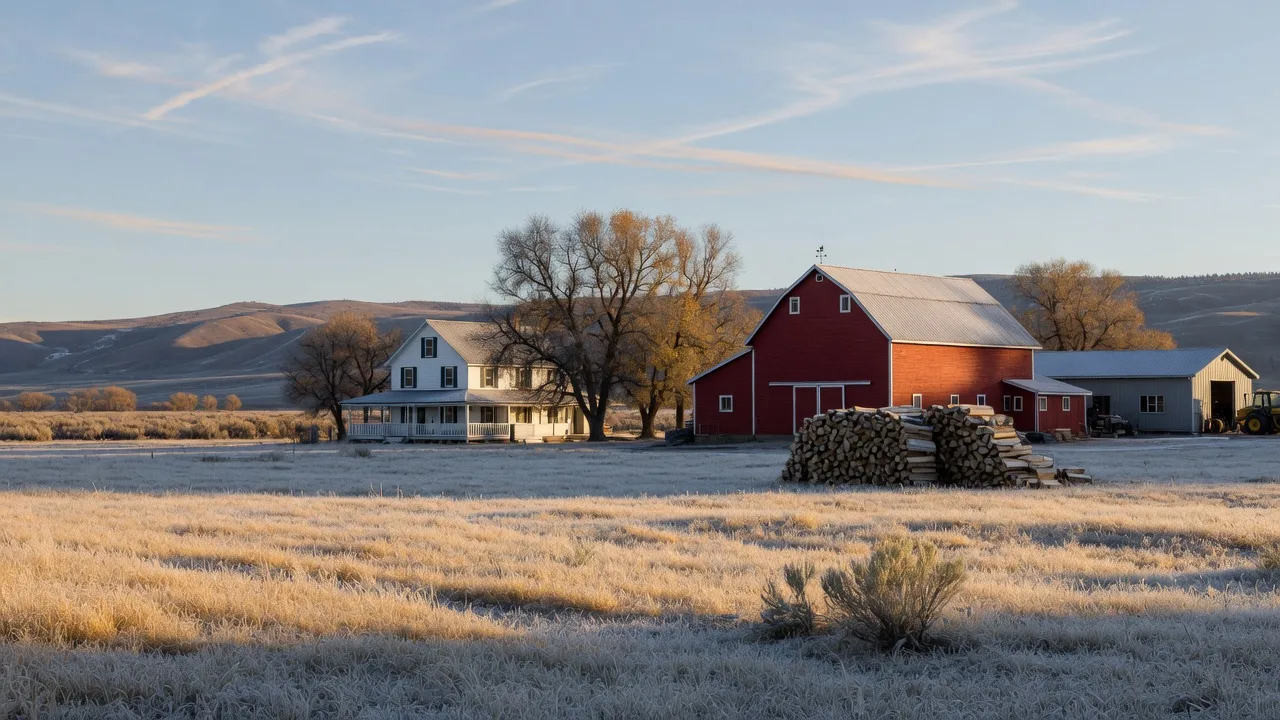
While you are at it, mud is the quiet killer of a rural driveway and a barn lot. Do the fall gravel work and trenching before the ground freezes, and stack firewood and hay where they stay dry through the snow.
The house itself
The same basics that apply everywhere matter more when you are on acreage, because help is a longer drive away. Have the furnace and chimney inspected, clean the gutters, shut off and drain exterior faucets, and top off whatever the property runs on, whether that is propane, heating oil, or firewood.
Turn the freeze into a buying checklist
If you are shopping for acreage this fall, a late-October showing tells you a lot about a property: how the sellers winterize, whether the well kept up through the dry months, and whether the septic records are in order. Those are exactly the questions we walk through on every acreage showing, season to season.
Keep reading
The Treasure Valley Acreage Homes Team
Two acreage agents at MORE Realty, serving Boise, Pocatello, Twin Falls, and Coeur d'Alene, Idaho. Questions about acreage? Call us, we answer our own phone.