
Starting an Orchard on Your Idaho Acreage
An orchard is one of the best uses of an acre or more in the Treasure Valley: a dozen or two fruit trees can feed a family for decades, and the valley's climate, roughly USDA zones 6b to 7b, is genuinely good for tree fruit. This guide covers the varieties that reliably thrive here, when to plant them, the chill-hour question that surprises newcomers, and the late-frost realities that decide where your trees will live.
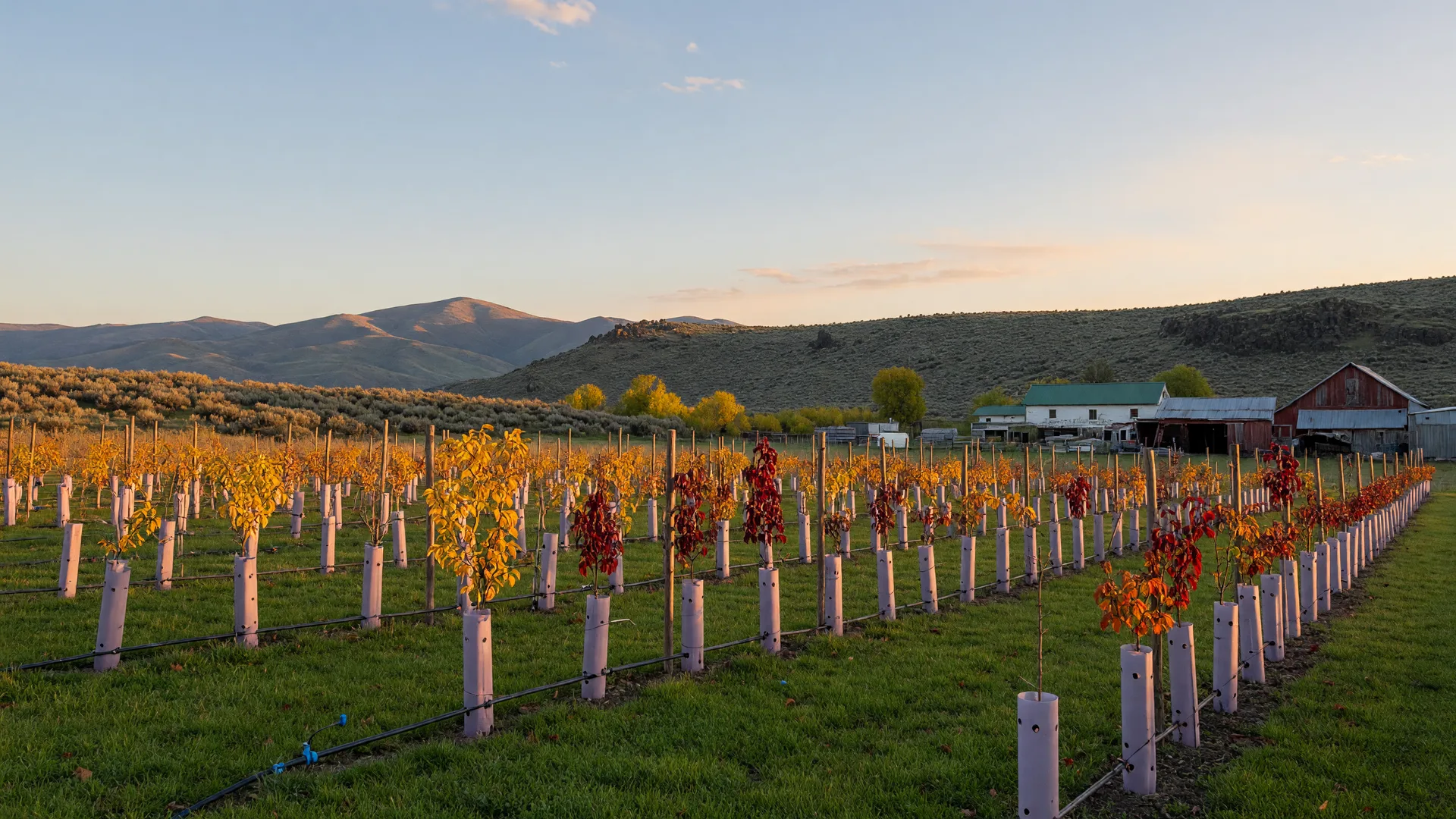
Why the Treasure Valley grows fruit well
The Treasure Valley is one of Idaho's genuine fruit regions, and the reasons are the same ones that make the land good for acreage: long summer days, warm afternoons, and irrigation water you can put on the ground. Most of the valley sits in USDA zones 6b to 7b, with much of Boise in 7a, which is warm enough for apples, pears, plums, peaches, nectarines, and apricots, the same tree fruits the University of Idaho Extension lists as adapted to the state's climate. In fall and winter, those trees go dormant and take the cold; in summer, they ripen with the same heat that fills the valley's orchards.
Choose the right varieties first
Variety selection matters more than almost anything else on a new orchard, because a tree planted wrong is a decade of disappointment. Local nurseries point to Gala, Fuji, and Gravenstein as very reliable apples in the Treasure Valley, with Honeycrisp, Golden Delicious, Zestar, Cortland, and Jonagold also proven performers. For cherries, the most dependable choice is the self-fertile Montmorency sour cherry; sweet cherries like Bing and Rainier can grow in southern Idaho but their buds are injured near 20 degrees below zero, so they want a warm, protected site. Peaches and nectarines need a warm, well-drained spot, with Reliance, Elberta, and Contender among the time-tested Idaho picks, and plums, including European types like Fortune and Empress, round out a practical home orchard.
- Apples: Gala, Fuji, Gravenstein, Honeycrisp, Zestar, Cortland, Jonagold (Gravenstein and Gala among the most reliable)
- Pears: a strong Idaho crop that needs less fuss than peaches and stores well
- Sour cherries: Montmorency, self-fertile and dependable
- Sweet cherries: Bing, Rainier, and friends, but only on a warm, protected site
- Peaches and nectarines: Reliance, Elberta, Contender, and O'Henry, in a warm pocket
- Plums and pluots: European types like Fortune and Empress, plus Japanese Black Amber where cross-pollination is planned
When to plant in the Treasure Valley
Bare-root fruit trees should go in while they are dormant, which in the Treasure Valley means late winter through early spring, roughly late February through March, with frost-sensitive apricots and early peaches best planted earlier in that window. Fall planting is possible with container-grown trees while the ground stays workable, but the classic Idaho rule is bare-root in late winter so roots establish before summer heat arrives. Whatever the season, dig the hole to match the root system, set the tree at the same depth it grew in the nursery, and plan for six to eight hours of full sun a day. The site should drain well: fruit trees hate wet feet far more than they hate a little drought.
The chill-hour question
Fruit trees need a certain number of winter chill hours, the hours between roughly 32 and 45 degrees, before they will break dormancy and bloom. The Treasure Valley generally provides 300 to 1,200 chill hours depending on the exact location and the winter, which is enough for most apples, pears, plums, and cherries, but it shapes the variety list. A low-chill variety suited to California will bloom too early in Idaho and get hit by frost; a very high-chill variety may not wake up fully. Local nurseries sell varieties matched to the valley for exactly this reason, so buy from a grower who knows Treasure Valley winters rather than ordering blind from a warm-climate catalog.
Water, spacing, and the long view
On acreage, water is usually the difference between a thriving orchard and a struggling one. Standard apple and cherry trees want roughly 18 to 25 feet between them at maturity, with dwarf and semi-dwarf varieties planted closer, so a quarter acre easily holds 20 to 30 trees. Plan the irrigation before you plant, whether that is drip line on a well, sprinklers on pressurized irrigation, or flood rows on surface water, and check the property's water situation first, because an orchard needs steady summer water every year, not just the year you plant it.
Finally, treat the orchard like the long-term improvement it is. Young trees need a few years of training: a stout stake, a simple pruning shape, protection from deer and chewing voles, and mulch kept a few inches from the trunk. The payoff comes around year three to five, when a family orchard in the Treasure Valley starts producing real harvests, and it keeps producing for decades.
Keep reading
The Treasure Valley Acreage Homes Team
Two acreage agents at MORE Realty, serving Boise, Pocatello, Twin Falls, and Coeur d'Alene, Idaho. Questions about acreage? Call us, we answer our own phone.