
What a Well and Septic Really Cost on Idaho Acreage
If the acreage you love has no city water or sewer hookup, the well and septic system are not details, they are the budget. In 2026, a permitted domestic well plus a new septic system typically runs roughly $18,000 to $45,000 on rural Idaho land, and harder sites with deep drilling or engineered drain fields can push well past that. Here is what the money actually goes toward, so you can read a listing, a disclosure, and a contractor quote with clear eyes.
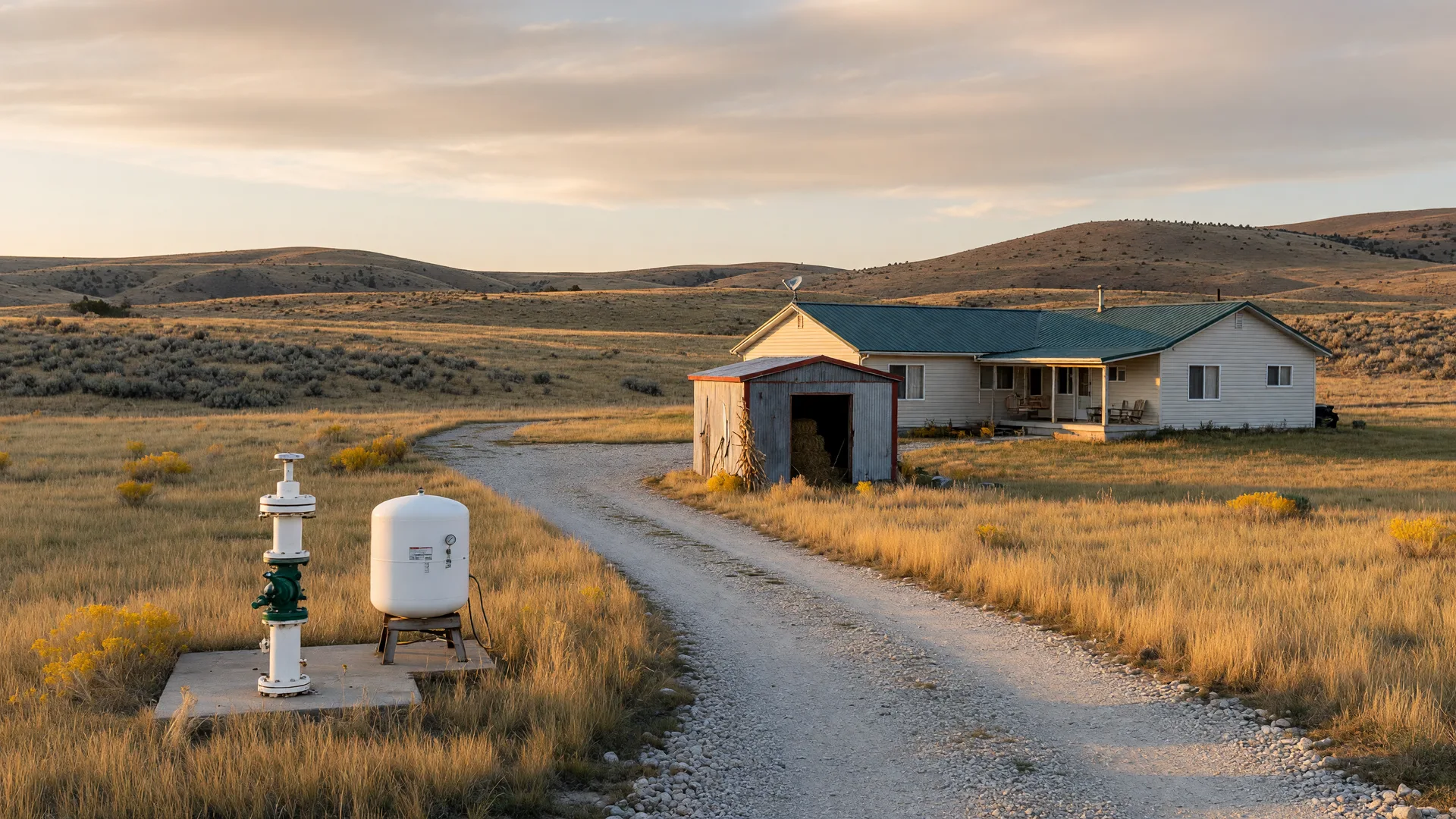
What the well costs
Drilling runs about $25 to $65 per linear foot in Idaho, and a completed domestic well, with casing, pump, and pressure tank, typically lands between $3,750 and $15,300 depending on depth and geology. Shallow, sandy aquifers on the valley floor sit on the low end; deep granite or basalt sites push the high end. Plan for a 4 to 8 week window from permit to water in the house, and budget separately for a water test, since arsenic and nitrates are the common Idaho concerns.
The permitting side is small but mandatory: a domestic well drilling permit from the Idaho Department of Water Resources runs about $75, the well must be drilled by a licensed driller, and domestic use is exempt from a separate water-right permit under Idaho law. The real cost variable is the site itself, which is why the well log and flow test on an existing property matter so much.
What the septic system costs
A new conventional three-bedroom septic system averages about $7,100 in Idaho, with most quotes between $6,500 and $7,750. On 2026 acreage builds, expect $8,000 to $20,000 all in: gravity-fed systems on good soil sit at the low end, while pressure-distribution or engineered mound systems, required on the tight and shallow soils found on parts of the Treasure Valley bench, sit at the high end.
Permits come from one of Idaho's seven public health districts, and fees vary: Central District Health charges about $1,070 for a new system permit with a test hole, and $535 without. The site evaluation needs roughly 6 to 8 feet of suitable soil, test holes dug 8 to 10 feet deep, and a scaled plot plan showing the required setbacks between the well, the septic tank, and the drain field. Budget weeks, not days, for the whole sequence: site evaluation, permit, install, inspection.
The costs people forget
- Power drops and long utility runs to a well house or septic pump, which can add thousands on a large parcel
- Driveway access permits and approach work for the drill rig and excavator
- Water testing before closing, and a septic inspection on any existing system
- Ongoing maintenance: well pump service and septic pumping every 3 to 5 years
Keep reading
The Treasure Valley Acreage Homes Team
Two acreage agents at MORE Realty, serving Boise, Pocatello, Twin Falls, and Coeur d'Alene, Idaho. Questions about acreage? Call us, we answer our own phone.