
Buying Acreage in Fall and Winter in Idaho
Fall and winter are the quietest time to shop for acreage in the Treasure Valley, and for a buyer that quiet is often an advantage: fewer competing offers, sellers who have carried a listing since summer, and a cold-weather tour that shows you exactly how the property performs in its hardest months. Most valley acreage runs on a private well and septic, so the off-season is also the best time to test the things that only reveal themselves when the ground is soft, the air is cold, and the snow has a chance to fall. Here is what a smart buyer checks between October and February.
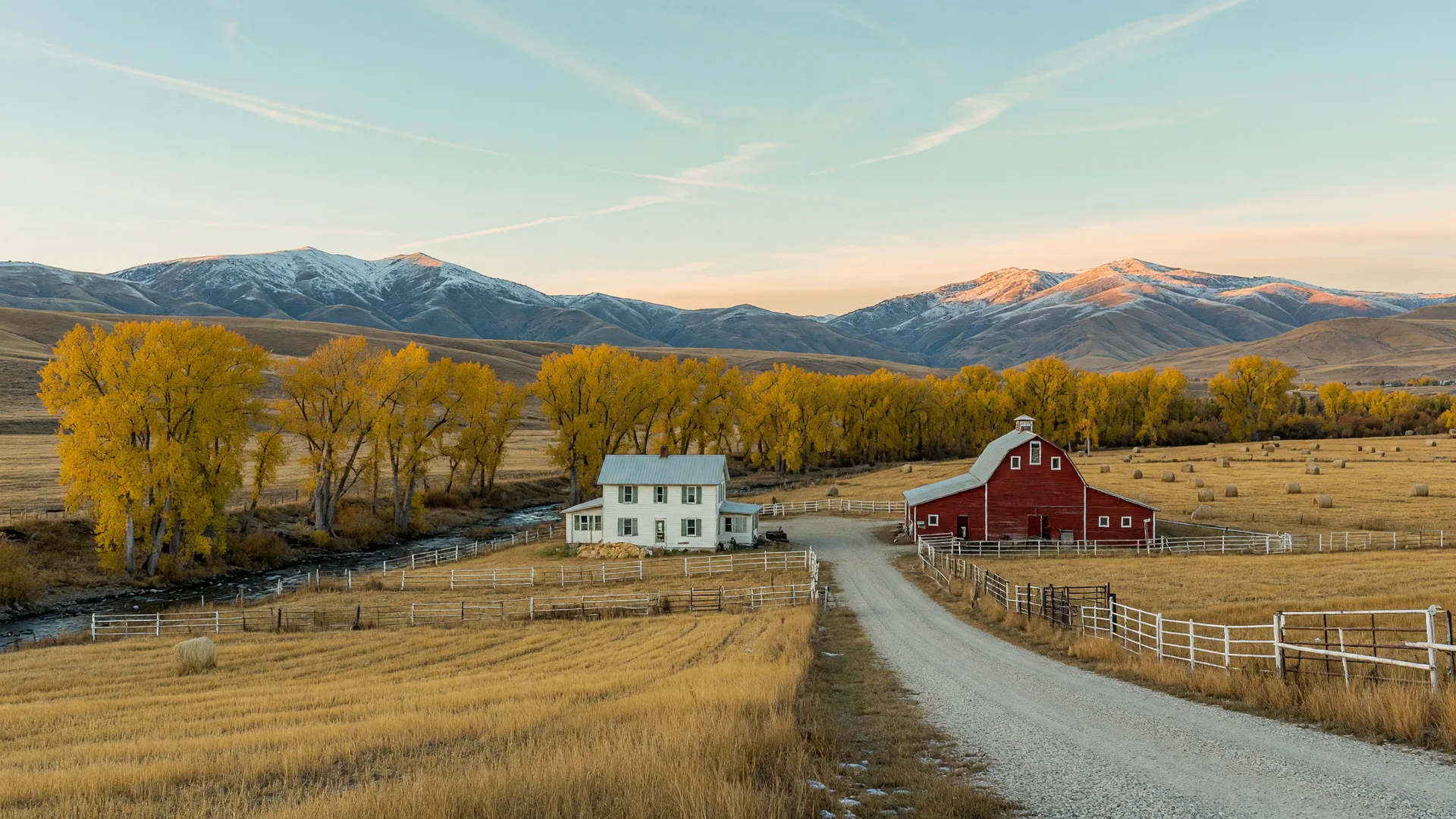
Why the off-season works for acreage buyers
Between late fall and early spring there are fewer buyers touring land, and sellers who listed in the summer are often more motivated to negotiate. Listing competition softens, and a seller who needs a winter closing is more willing to talk about concessions. None of that means you should rush; it means you have room to do the diligence that acreage deserves, because the seller's calendar is working in your favor for a change.
Tour the well when it is working hardest
A private well has to perform in the cold, not just in July. On a fall or winter tour, ask for a well performance inspection: pump function, pressure, and a measured flow rate, with a residential well commonly expected to yield at least 5 gallons per minute. A lab water-quality test is a separate step and should cover bacteria, nitrates, and the metals most common in Idaho groundwater, including arsenic. The Idaho Department of Health and Welfare recommends testing bacteria and nitrates at least once a year. The point of doing all of it in the off-season is simple: a well that keeps up on a cold, dry winter day is the one you can trust in August.
Find the septic before the snow does
A pre-purchase septic inspection is one of the most important steps on acreage, and winter makes it harder, not easier, if you wait. Have the tank located, uncovered, and checked: sludge and scum depth, the baffles, the effluent filter, and the condition of the drain field. Older systems, and especially systems without a current permit, are the red flags you want to write into your offer as contingencies. If the property will close in the snow months, mark the tank lid, the distribution box, and the wellhead with tall stakes while you can still find them, and never drive or park equipment over the drain field.
Ask about irrigation winterization
Many Treasure Valley acreage properties carry irrigation shares or an in-ground sprinkler system, and those lines have to be blown out before the first hard freeze or the underground pipe, valves, and backflow preventer can crack. Boise's first freeze usually lands in early to mid-October, so by the time you are touring in November that work should already be done. Ask the seller or current owner whether the blowout happened, and get it in writing if you close before spring.
Read the land in winter
A cold-weather tour shows you what a summer tour hides. Bare ground reveals drainage and slope, where water sits, and how the soil handles rain and snowmelt. A long gravel driveway that felt fine in August shows its true condition in a February storm, along with whether there is a recorded easement and a maintenance agreement behind it. This is also the season to see the approach to the property: if the road is private, find out who plows it and whether the documents say snow removal is your responsibility. On an acreage property, access in winter is not a minor detail; it is a test the property has to pass.
- Run a well performance inspection and a lab water-quality test in the cold months, when the well has to prove itself
- Inspect the septic and stake the tank, distribution box, and wellhead before snow buries them
- Confirm the irrigation system was blown out before the first hard freeze
- Walk the property on bare ground to read drainage, slope, and where water sits
- Verify recorded access and ask who maintains and plows the driveway, in writing
Make the season part of your offer
You can protect the winter deal in the contract: make the offer contingent on a passing well performance test, a clean septic inspection, and a recorded easement for access, and give yourself a closing window that leaves time to re-test the well when the ground thaws. At MORE Realty we review the well, septic, irrigation, and access paperwork before we show acreage, and we will tell you exactly what a cold-weather tour did and did not prove before you commit. Call us at (208) 369-7447 or send a note through the contact page, and we will help you shop the quiet season with your eyes open.
Keep reading
The Treasure Valley Acreage Homes Team
Two acreage agents at MORE Realty, serving Boise, Pocatello, Twin Falls, and Coeur d'Alene, Idaho. Questions about acreage? Call us, we answer our own phone.