
Fencing Your Acreage: What to Know Before You Buy
Fencing is the most visible feature on acreage, and the one buyers budget for last. It decides what you can keep on the land, what your neighbors see, and what the next owner inherits, and on a one-plus-acre property the difference between a good fence and a bad one is measured in thousands of dollars. This guide covers the four fence families you will actually see in the Treasure Valley, what each costs per foot, and what to check on an existing fence before you write an offer.
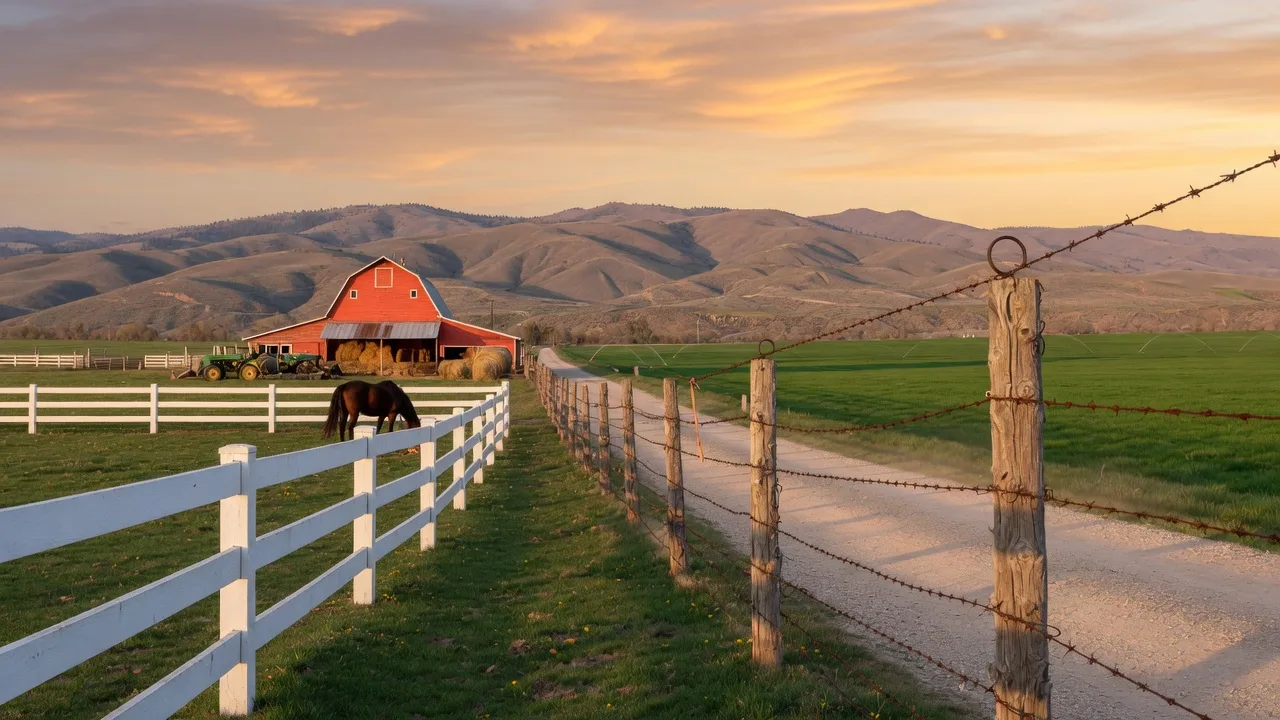
Why fencing matters more on acreage
On a subdivision lot, a fence is mostly privacy. On an acre or more, it is infrastructure: it keeps livestock in and wildlife out, protects gardens and hay from deer, marks your boundary, and contains dogs, kids, and equipment. Buyers notice fences first, but they rarely budget for them, and a sagging or missing boundary fence on a five-acre parcel can cost more to replace than a new roof.
The four fence families
Nearly every Treasure Valley acreage fence is one of four types, and each has a different job and a different price. The ranges below are typical installed costs per linear foot from national fencing sources; local Idaho quotes vary with terrain, materials, and how much you install yourself.
- Barbed wire, three to five strands on steel or wood posts: roughly $1.50 to $4 per foot installed. The classic cattle and boundary fence, cheap to build and easy to maintain, but not a safe choice for horses or small animals.
- Woven wire, or field fence, often with a barbed top wire: roughly $1.50 to $6 per foot installed. Tighter mesh keeps sheep, goats, and calves in, and it pairs well with electric wire for predators.
- Board fencing, wood posts with rails: roughly $20 to $50 per foot installed. The horse-property standard and the best-looking fence in the market, but the most expensive to build and the most work to maintain.
- Pipe or steel fencing: roughly $13.50 to $40 per foot installed. Nearly indestructible, favored for corrals, pens, and front-of-property lines, and the most expensive option per foot.
Most horse places mix them: board or pipe where people see it, wire everywhere else. That is the honest way to get curb appeal without fencing the whole property in premium materials.
What to check on an existing fence before you offer
- Posts: are they solid, straight, and set deep enough? A leaning corner post means the whole line is failing.
- Wire: rust, sagging, and broken strands, especially along the bottom where animals push.
- Gates: do they swing, latch, and clear the ground? Gate height and width decide whether your tractor and hay wagon fit.
- Corners and braces: the weak points of every fence line, and the first place to look for rot and rust.
- The property line: is the fence actually on the boundary? A survey answers this, and it matters more on acreage than anywhere else.
- Shared fences: who owns and maintains the line between you and the neighbor? Idaho's fence law and your deed both speak to this.
Fencing, water, and the drain field
Fences interact with the rest of the property in ways subdivision buyers never think about. Never build over a septic drain field, keep fence lines clear of irrigation ditches and head gates so water crews can work, and place gates where equipment needs to enter, not where it is convenient to the house. A fence that blocks your own tractor access is a mistake you will curse every spring.
Budgeting the fence you want
Rough math helps before you shop: a square five-acre parcel has about 1,870 feet of perimeter. At $2 to $4 per foot, a barbed wire boundary runs roughly $4,000 to $7,500; at $20 to $50 per foot, board fencing on the same line runs $37,000 to $93,000. That gap is why the fence plan should be part of your budget conversation from the start, and why many buyers choose a property whose fencing is already in place.
Zoning and HOA rules still apply
Acreage does not mean fence freedom. Ada and Canyon counties set fence height and setback rules, Idaho's fence statutes govern boundary lines and livestock at large, and an HOA or set of CC&Rs can restrict materials, heights, and even whether you may fence at all, even on a full acre. Ask for the documents before you offer, the same way you would for livestock rules.
Let the fence tell you about the property
A well-maintained fence line is a quiet signal that the rest of the property has been cared for, and a neglected one often means the well, septic, and outbuildings have been neglected too. When you tour acreage, spend as long outside the house as inside it, and let us walk the lines with you. Fences are the cheapest inspection you will ever get.
Keep reading
The Treasure Valley Acreage Homes Team
Two acreage agents at MORE Realty, serving Boise, Pocatello, Twin Falls, and Coeur d'Alene, Idaho. Questions about acreage? Call us, we answer our own phone.