
Horse Property in Idaho: What to Check Before You Buy
Horse property is the most common reason someone calls us about an acre or more in the Treasure Valley, and the good news is that Idaho makes it genuinely achievable: you do not need a 40-acre ranch to keep horses, but you do need the right parcel, the right zoning, and a plan for water. This guide walks through how many acres a horse really needs, what watering, fencing, and shelter add up to, and how Ada and Canyon County actually treat horse keeping in their zoning codes, so you can check a property with confidence before you offer.
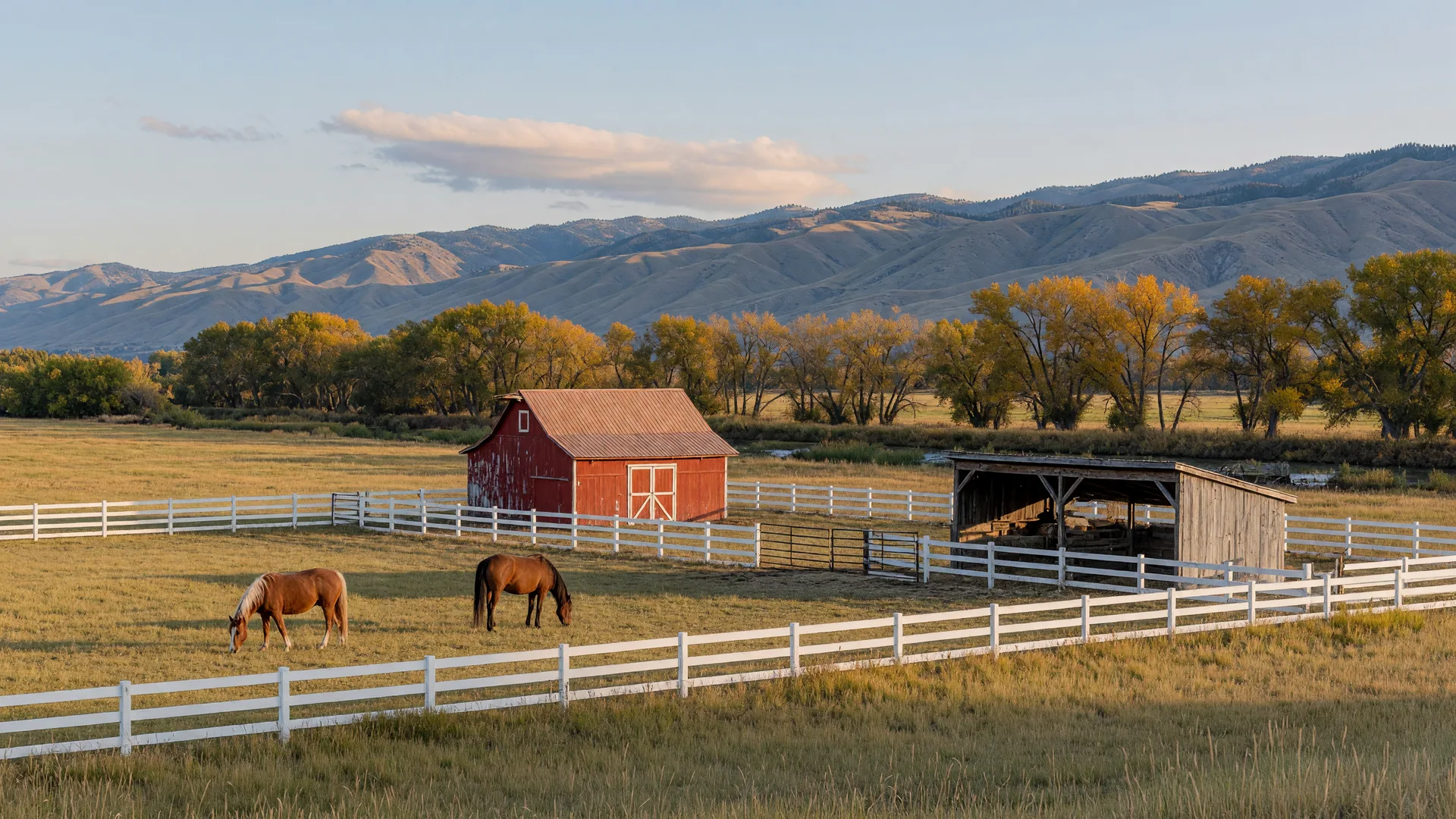
How many acres does a horse really need?
The honest answer is that most Treasure Valley horse properties work on two to five acres, and the number that matters is the one between the horse and the pasture. Common guidance is roughly two acres per horse where pasture is the main feed source, and at least half an acre to a full acre per horse for turnout, housing, and a dry lot. In Boise city limits the floor is fixed: you need at least one acre to keep horses. Garden City sets the bar at 21,780 square feet, about half an acre, of open space per horse, and in unincorporated Ada and Canyon counties the practical limit is usually pasture quality and winter feed, not the ordinance.
Two caveats surprise buyers every year. A horse kept mostly on hay in a small paddock needs far less pasture acreage than one expected to graze for most of its diet, and a dry, graveled sacrifice area is worth more than a fifth pasture that turns to mud each spring. Work backwards from how you will actually keep the horse, then size the land to the plan.
Water: the daily number that surprises people
An average 1,000-pound horse drinks about 9 to 10 gallons of water a day in moderate weather, with a normal range of 5 to 15 gallons, and that number can roughly double in summer heat, with heavy work, or for a lactating mare. On well water, that means the well, the pump, and the plumbing have to be sized for the house plus the livestock, not just the kitchen sink.
- Have the well flow-tested in summer conditions, not in spring when the water table is high; a horse property needs sustained flow, not peak flow
- Plan frost-proof hydrants or heated troughs for the winter months, because hauling water by hand is the fastest way to fall out of love with a spread
- Test the water quality for livestock, including total dissolved solids and routine metals, since well water that is fine for people can still need attention for animals
- Keep troughs and tanks on a cleaning schedule; a green tank in August is a health problem waiting on you
Fencing and shelter: where the real budget goes
Board fencing or safe wire fencing with a smooth top rail is the Treasure Valley standard for horse paddocks, and barbed wire or large-opening woven wire are the two materials that earn a red flag on an inspection. Walk every fence line: check for sagging posts, broken boards, and gates that swing true, because repairs on a two-acre perimeter are a weekend project and on a forty-acre boundary they are a budget line.
Shelter does not need to be a show barn. A three-sided run-in shed with the opening away from the prevailing winter wind, plus good footing in the paddock and a graveled gate area, covers most Idaho weather. Barns and heated tack rooms are upgrades, not requirements, though the concrete, wiring, and roof condition of an existing barn are worth a careful look before you rely on it.
Zoning in the Treasure Valley: what the codes actually say
Boise allows horses on parcels of at least one acre within city limits, and city rules expect the livestock to be kept on the property continually. Garden City allows up to two horses per property under its half-acre open-space rule per horse. In unincorporated Ada County, the newer countywide zoning code lists agricultural use as a permitted use in most districts, with larger equestrian facilities handled as conditional uses. Canyon County measures animal density in animal units, with one unit equal to two horses, and requires that livestock never run at large; qualifying parcels over five acres may also qualify for the county's agricultural building exemption.
One tax note worth flagging: grazing a horse kept mainly for personal use does not by itself qualify land for Idaho's agricultural property tax valuation. If the tax treatment of pasture matters to your budget, put that question to the county assessor's office before you buy, not after.
The horse-property checklist for buyers
- Pull the zoning file on the exact parcel and confirm horses are a permitted use there
- Verify the well's flow rate in summer and the water quality for livestock
- Walk every fence line and note the materials, the posts, and the gates
- Confirm the shelter and barn condition, and whether the layout leaves room to expand
- Ask about irrigation water rights for pasture, and whether the land stays green or needs a dry-lot plan
- Time the winter commute to the nearest vet, feed store, and trailer-friendly road access
Keep reading
The Treasure Valley Acreage Homes Team
Two acreage agents at MORE Realty, serving Boise, Pocatello, Twin Falls, and Coeur d'Alene, Idaho. Questions about acreage? Call us, we answer our own phone.