
Raising Chickens on Your Idaho Acreage
Raising chickens is one of the most common reasons people buy an acre or more in the Treasure Valley, and a small flock fits comfortably on even a one-acre lot. This guide walks through the Idaho specifics that matter most: whether your zoning allows hens, where to put the coop, how to keep raccoons and coyotes out, and how to carry a flock through a cold, dry valley winter.
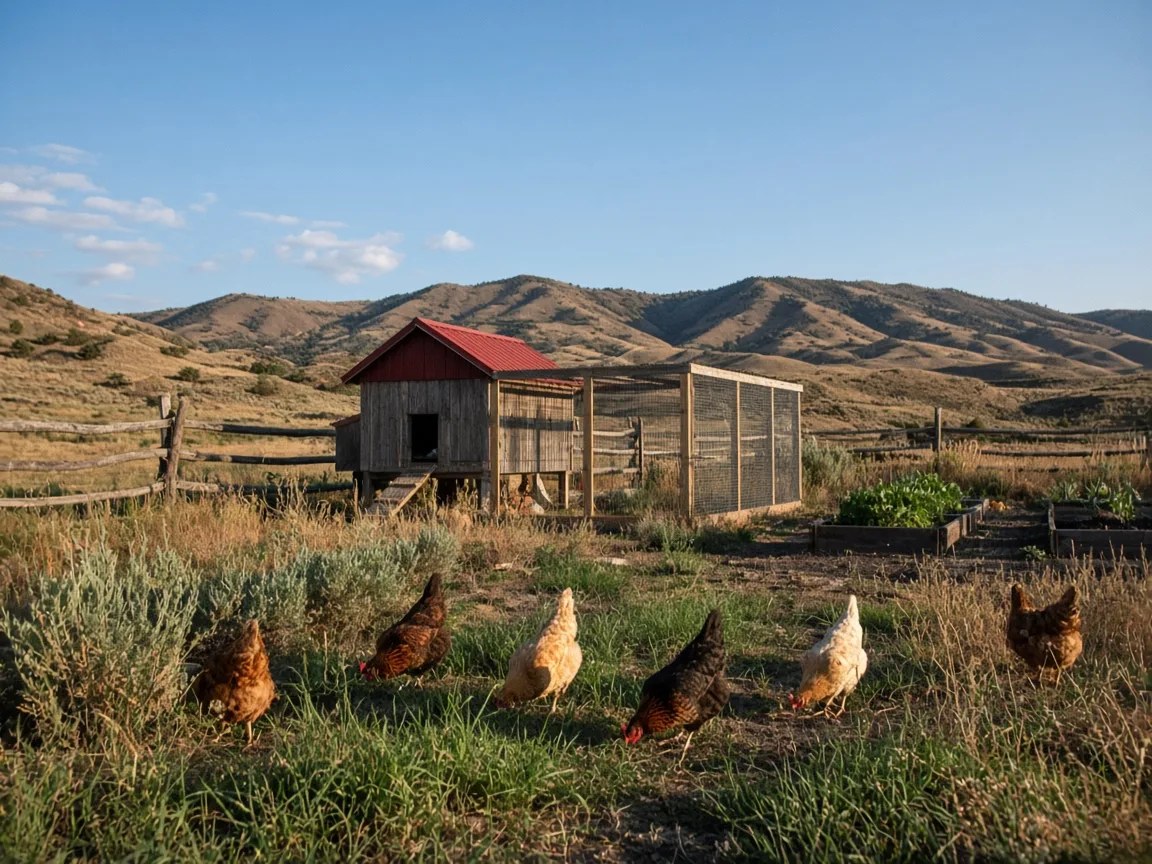
Your zoning decides first
Before you buy hens, check whether your property allows them. Most rural-residential and agricultural zones in Ada and Canyon County permit a small flock of hens on a qualifying lot, but the rules differ by zone and parcel size, and some newer subdivisions carry HOA restrictions that override the county. The order to check is county zone, then any HOA or CC&Rs, then city ordinance if you sit near a city limit. A ten-minute call to the county planning office answers it, and it saves real heartbreak to ask before you build the coop.
Where the coop belongs on an acreage
Site the coop where morning chores are easy: close enough to the house that checking water and eggs is part of your coffee routine, on well-drained ground, and with the door facing south so the winter sun warms the run. A gravel or sand pad under the run beats mud every spring thaw, and the whole setup should sit away from your wellhead and septic drain field, where runoff from the chicken yard never belongs.
- Facing south gives hens the most winter light and keeps the coop drier
- A gravel pad under the run saves you from a muddy mess every spring thaw
- Keep the run downhill of the well and clear of the septic drain field
Predator-proofing is the first job
In the Treasure Valley, the list of things that would like a free chicken is long: raccoons, skunks, weasels, foxes, coyotes, owls, hawks, and the neighbor dog. A run covered overhead with 1/2-inch hardware cloth (not chicken wire, which raccoons can tear), hardware cloth buried a foot into the ground, and a coop door that latches securely at dusk each night are the difference between a hobby and a heartbreak.
Water, feed, and the winter routine
Chickens need clean water every day, and in an Idaho winter that means a heated waterer or a twice-daily breaking of ice. Feed keeps best in a metal container with a tight lid, where mice and rats cannot chew in. Hens will happily clean up garden surplus in summer, but they still need a complete layer ration rather than scraps alone, plus grit to digest and oyster shell to keep laying.
- Use a heated base or heated waterer when nights go below freezing
- Store feed in metal, not plastic bags, or you will be feeding rodents too
- Keep a supply of grit and oyster shell so hens can digest and keep laying through the winter
Breeds that handle the valley
Cold, dry, and occasionally very windy, a Treasure Valley winter asks for hardy birds. Heritage breeds like Rhode Island Reds, Plymouth Rocks, Wyandottes, Australorps, and Orpingtons carry heavy feathering and handle cold far better than the lean Mediterranean-style layers. A local feed store or hatchery can point you to what works for your setup, and starting with a hardy breed is cheap insurance against a rough January.
See how chickens fit with the livestock and zoning rules in Ada and Canyon County
Keep reading
The Treasure Valley Acreage Homes Team
Two acreage agents at MORE Realty, serving Boise, Pocatello, Twin Falls, and Coeur d'Alene, Idaho. Questions about acreage? Call us, we answer our own phone.